A complete, step-by-step chess journey made for kids
From the first pawn move to rook endgames, built by chess teachers. Every idea is taught in the order children are ready for it, and every lesson position and answer is checked by a chess engine, so what your child learns is real chess, taught properly.
And it's made to be loved: big monster personalities, engaging voices, songs that grow with every win and a playful world full of surprises keep kids motivated to come back, day after day.
The same ideas taught at chess clubs, from opening principles to endgame technique, arranged into a clear path for young players.
Big monster personalities, engaging voices, songs to unlock and a playful world make kids want to play again tomorrow, and that practice is where progress happens.
Each monster plays a little stronger than the last, and Tock's help fades as your child grows, so it's never too easy or too hard.
Tock nudges before he tells: a hint, then a square, and only then the move. Children choose their own moves and learn to take the initiative.
Habits strong players use, like checking who's watching, looking at checks, captures and threats, and seeing two moves ahead.
One concept per lesson, practised straight away in real games, and brought back again later in the saga and in "Today's 3".

Meet Professor Tock
Tock is a wise old tortoise who follows your child through the whole adventure. He knows what they've learned and what comes next, and he's always one tap away.
The right hint at the right time. First a nudge ("look at your knight"), then a highlighted square, and only then the move.
Every concept, step by step. Tock guides your child from the first pawn move through tactics and strategy to the endgames strong players know.
Spots danger before it's too late. When a piece can really be lost, the square turns red and the attackers open their eyes.
Careful! The pawn and the queen are both watching that square. Is your knight safe there?
"Who's watching?" shows exactly which pieces can take yours.
Mistakes become lessons, not losses
Here the knight jumped to g5, but the pawn on h6 and the queen on d8 can both capture it. Tock warns your child, shows who's watching and gives them the chance to think again.
Hints and takebacks are unlimited and free for every child. Help shows in the stars, never as a punishment.
Seven worlds, one complete chess education
Each world has 26 levels: 10 short lessons and 16 games against its monsters, ending in a boss battle. Ideas build on each other, and big ones keep coming back. Pick a world to see what your child learns there, or jump to every lesson below.
Brand new to chess? Before the saga, children meet the whole team (pawn, rook, bishop, knight, queen and king) and learn how each piece moves. The School is always there for extra practice on any topic.
Start the adventureMeet the team: how the pieces move
Every child starts by meeting the six pieces, one at a time, with voice-over and hands-on tasks. Children who already know the moves can skip straight to the saga.
Rules & basicsThe pawn
Pawns move straight forward one square at a time, or two squares on their very first move. They capture diagonally, never move backwards, and a pawn that reaches the far side becomes a queen or another piece.
Rules & basicsThe rook
The rook slides in straight lines, up, down and sideways, as far as it likes, until something is in the way. It captures the first enemy piece in its path.
Rules & basicsThe bishop
The bishop slides along diagonals as far as it likes. Because it only moves diagonally, a bishop stays on the same colour square for the whole game.
Rules & basicsThe queen
The queen combines the rook and the bishop: straight lines and diagonals, any distance. She is the most powerful piece on the board.
Rules & basicsThe knight
The knight moves in an L shape: two squares one way and one to the side. It is the only piece that can jump over other pieces, and it always lands on a square of the other colour.
Rules & basicsThe king
The king moves one square in any direction. He can never move onto a square where he could be captured, and protecting him is the whole point of the game.
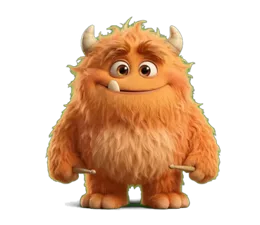
Monster Meadow
Focus: learn the basics and how the pieces move, then free pieces, piece values, the centre, check and checkmate. Help from Tock is generous here.
TacticsTake the free piece
A piece that nobody guards can be captured for free. Children learn to check whether an enemy piece is defended before they take it, and to grab it when it isn't.
Remember: if nobody guards a piece, take it for free!
Rules & basicsWhat pieces are worth
Pieces have values: queen 9, rook 5, bishop and knight 3 each, pawn 1. Knowing them helps children choose the best capture and avoid bad trades.
Remember: take the piece worth the most, if it's safe to take.
Thinking habitsGet out of danger
Noticing when one of your own pieces is attacked, and moving it to a square where it is safe.
Remember: when a piece is attacked, move it to a safe square.
OpeningsTake the middle
The four centre squares (d4, e4, d5 and e5) are the most important squares early in the game. Pieces and pawns in the middle control more of the board.
Remember: push a middle pawn first, then bring out your pieces.
OpeningsWake up your team
Developing pieces: bringing the knights and bishops off the back row early, instead of moving the same piece again and again. In the app this is called waking up your team.
Remember: bring out your knights and bishops first.
Rules & basicsCheck!
A check is an attack on the king. Children learn to spot checks and to give them.
Remember: a good check is a safe check, where your piece can't be taken.
Rules & basicsGet out of check
There are exactly three ways out of check: move the king, block the check, or capture the piece that is giving check.
Remember: run, block or take, and pick the way that keeps your pieces safe.
CheckmatesCheckmate
Checkmate: the king is in check and has no way to escape. That ends the game. Children deliver their first checkmates.
Remember: checkmate is check where the king can't escape.
Rules & basicsCareful, don't stalemate!
If the player to move has no legal moves but is not in check, the game is a draw by stalemate. Children learn to leave the losing king a square to move to when they are winning.
Remember: when you're far ahead, always leave their king a square to move to!
CheckmatesMate in one
Finding checkmate in one move, in many different positions with different pieces.
Remember: look at every check, and see if the king can escape.
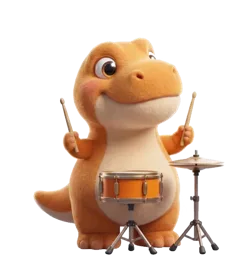
Dino Valley
Focus: don't give pieces away, castle early, stop Scholar's Mate, promote pawns and fork with knights.
Thinking habitsDon't give pieces away
Before every move, check that the piece you move won't be left where it can be taken for free. This one habit wins more children's games than any trick.
Remember: before you move, check that nobody can take your piece there.
Thinking habitsDefend your piece
Protecting an attacked piece by guarding it with another piece, so that taking it would cost the opponent.
Remember: a piece with a friend guarding it is much harder to win.
OpeningsCastle early
Castling is the special move where the king and a rook move together. It tucks the king into safety and brings the rook into the game, so it's best done early.
Remember: castle early to hide your king in the corner.
OpeningsThe queen waits
Why the queen should wait: if she comes out too early, the opponent can chase her with smaller pieces while developing their own team.
Remember: keep your queen at home early, and chase theirs while you bring out pieces.
OpeningsStop Scholar's Mate
Recognising and stopping Scholar's Mate, the quick checkmate on f7 (or f2) with queen and bishop that catches many beginners.
Remember: when the queen comes early, guard the weak pawn next to your king.
CheckmatesBack-rank mate
Back-rank mate: a rook or queen checkmates a king trapped on the back row by its own pawns. Children learn to use it and to avoid it.
Remember: a king stuck behind its pawns can be mated on its back row, so give your own king air.
EndgamesMake a queen
Promotion: a pawn that reaches the last row turns into a queen (or a rook, bishop or knight).
Remember: make a queen, but check that her square is safe first.
EndgamesPush your free pawn
A passed pawn has no enemy pawns in front of it or on the files next to it. Pushing it forward, with support, can decide the game.
Remember: a free pawn has nothing in its way. Push it to make a queen!
EndgamesPawn races
When both sides race pawns towards promotion, counting the moves tells you who gets there first.
Remember: count the moves, and use the double step at the start.
TacticsKnight forks
A fork is one piece attacking two things at once. Knight forks are the classic: the opponent can only save one piece.
Remember: a knight can jump to attack two pieces at once. Watch out for their knights too!

Jungle Jam
Focus: the big tactics, forks, pins and skewers, spotting threats, good trades and the king as an endgame fighter.
Thinking habitsSpot the threat
After every opponent move, ask: what does my opponent want to do now? Then stop the threat before it happens.
Remember: before you move, ask what your opponent wants to do.
TacticsQueen forks
Using the queen to attack two pieces at once, often together with a check.
Remember: a fork attacks two pieces at once. They can only save one!
Middlegame & strategyGood trades
When trading pieces is a good idea: give something worth the same or less, and trade more willingly when you are ahead.
Remember: a good trade wins more points than it loses.
TacticsSpot a pin
A pin: a piece can't move without exposing a more valuable piece (often the king) standing behind it.
Remember: pins are a great way to trap pieces. A piece standing in front of its king might be pinned and won!
TacticsUse a pin
Attacking a pinned piece. It can't run away, so it can often be won.
Remember: a pinned piece can't run away. Attack it with a pawn, and it is yours!
TacticsPile on a pin
Piling up on a pin: adding more attackers to a pinned piece until it falls.
Remember: count attackers and guards. A pinned piece can't run, so bring more attackers than guards!
TacticsSkewer
A skewer is a pin in reverse: attack a valuable piece, and when it moves, capture the piece behind it.
Remember: when their king and another piece stand on one line, check the king. When it steps away, take the piece behind!
Thinking habitsStop the fork
Seeing a fork coming and making a move that stops it.
Remember: see the fork coming, and stop it before it happens.
EndgamesEnd game: the king fights
In the endgame, with fewer pieces left, the king becomes a strong fighting piece and should march towards the centre.
Remember: in the end game, bring your king to the middle and lead your pawns.
TacticsTrapped pieces
A piece with no safe squares to go to is trapped and can be won.
Remember: count the safe squares of their piece. Take them all away, and it is trapped!

Mystery Island
Focus: endgame technique, the basic checkmates with queen and rooks, king and pawn endings, the opposition, and discovered attacks.
CheckmatesKing and queen mate
Checkmating a lone king with king and queen, step by step, without stalemating.
Remember: it must be check! A trapped king that isn't in check is a draw.
CheckmatesTwo-rook ladder mate
The ladder mate: two rooks take turns to push the enemy king to the edge of the board and checkmate it.
Remember: one rook guards a row, the other gives check.
EndgamesKing and rook: the method
The method for checkmating with king and rook against a lone king: box the king in, shrink the box, then deliver mate.
EndgamesAhead? Trade pieces, not pawns
When you're ahead in material, trade pieces rather than pawns to reach an endgame that is easy to win.
Remember: when you're ahead, trade pieces, not pawns. Your pawns can become queens!
EndgamesOpposition
The king as a fighter in the endgame, and the opposition: kings facing each other with one square between them, a key idea in pawn endgames.
Remember: in the end game, bring your king to the middle and lead your pawns.
EndgamesKing and pawn: the opposition
King and pawn against king: using the opposition to promote the pawn, or to hold the draw as the defender.
EndgamesEnd game: the active rook
The active rook in the endgame: rooks belong behind passed pawns and on open lines, not stuck defending.
Remember: cut the enemy king off with your rook, and put rooks behind free pawns.
TacticsDiscovered attack
A discovered attack: moving one piece uncovers an attack by another piece standing behind it.
Remember: when your piece stands in front of your rook, bishop or queen, moving it opens a surprise attack!
TacticsDouble check
Double check: a discovered attack where both pieces give check at once. The king has to move.
Remember: in a double check, the king must move. Nothing can block or take both checkers!

Mississippi Swamp
Focus: combinations, checks-captures-threats, removing the defender, deflection, decoys, overloading and famous mating patterns.
Thinking habitsChecks, captures, threats (look first)
The habit strong players use: before choosing a move, look at all checks, captures and threats.
Remember: before every move, look for checks first, then captures, then threats.
TacticsRemove the defender
Removing the defender: capture or chase away the piece that guards something, then win what it was guarding.
Remember: if a piece is guarded, take its guard first. Then the piece is free!
CheckmatesMate in 2
Checkmate in two moves: a forcing first move, then mate whatever the opponent does.
CheckmatesSmothered mate (the knight's trick)
Smothered mate: a knight checkmates a king that is completely surrounded by its own pieces.
Remember: a king boxed in by its own pieces can't run, and nobody can block a knight's check.
CheckmatesCorner mates (Arabian, Anastasia)
Classic checkmate patterns near the corner, such as the Arabian mate (rook and knight) and Anastasia's mate.
Remember: a king in the corner or on the edge has few squares. A knight covers them while the rook or queen checks.
TacticsDeflection (pull the guard away)
Deflection: forcing a defending piece away from the square or piece it is protecting.
Remember: a check can pull the guard away. Then the piece it guarded is free!
TacticsDecoy (lure the king in)
Decoy: luring the king or another piece onto a bad square, often with a sacrifice.
Remember: a capture with check can lure the king onto a bad square. Then your next piece checkmates!
TacticsOverloaded defender
An overloaded defender has two jobs and can't do both. Attack one job and win the other.
Remember: a guard can't do two jobs at once. Take one thing it guards, and the other falls.
Middlegame & strategyMiddle game: open lines and the 7th row
Open files and the seventh row: where rooks are strongest in the middlegame.
Remember: rooks love open lines. Double them, then invade the seventh row.
Middlegame & strategyRook on the 7th
Putting rooks on open lines, doubling them, and invading the seventh row, where they attack pawns and trap the king.
Remember: rooks love open lines. Double them, then invade the seventh row.

NYC Nights
Focus: first moves as White and Black, outposts, the bishop pair, attacking the king and the key rook endgames.
OpeningsFinish the opening: connect the rooks
The opening is finished when the knights and bishops are out, the king has castled and the two rooks can see each other.
Remember: knights and bishops out, king castled, queen up one step. Then your rooks can see each other!
OpeningsMy first moves as White
Sound first moves as White, following the opening principles: take the centre, develop, castle (for example 1.e4 e5 2.Nf3 Nc6 3.Bc4).
OpeningsMy first moves as Black
Sound first moves as Black: fight for the centre, develop your pieces and get your king safe.
Middlegame & strategyMiddle game: outposts and forks
Outposts: safe squares in the opponent's half where a knight can't be chased away by pawns, and the forks that knights find from there.
Remember: a knight loves an outpost, a square your pawn guards and no enemy pawn can chase it from.
Middlegame & strategyMiddle game: long diagonals and the bishop pair
Bishops on long diagonals, and why two bishops together (the bishop pair) are so strong.
Remember: keep your two bishops, give them long diagonals, and keep your pawns off your bishop's colour.
Middlegame & strategyAttack the castled king
Attacking the castled king by bringing pieces and pawns towards it.
Remember: bring more attackers than they have defenders. Two pieces on one square next to the king can checkmate!
TacticsX-ray attack
An X-ray: a piece attacks or defends a square through another piece standing on the same line.
Remember: a rook, bishop or queen can look right through a piece. When that piece moves away, the attack comes through!
TacticsIn-between move
The in-between move: before making the expected recapture, play a stronger move first, such as a check.
Remember: before you take back, look for a check that wins even more!
EndgamesHold the draw: Philidor (rook endings)
The Philidor position: the defending technique that holds a rook endgame a pawn down to a draw.
Remember: keep your rook on your 3rd row. When their pawn steps onto it, go far away and check from behind!
EndgamesBuild a bridge: Lucena (rook endings)
The Lucena position: building a bridge with the rook to shelter the king and promote the pawn in a rook endgame.
Remember: rook to the 4th row, king walks out, then the rook blocks the check. That's the bridge!

Starlight Station
Focus: strategy, weak pawns, pawn breaks, improving your worst piece, zugzwang, underpromotion and calculating ahead.
Middlegame & strategyWeak pawns
Weak pawns, such as isolated, doubled and backward pawns, and how to attack them.
Remember: a lonely pawn, or two pawns on one line, can't be guarded by a pawn friend. Aim at them!
Middlegame & strategyImprove your worst piece
Finding your least active piece and giving it a better square, a habit of strong players.
Remember: when you don't know what to do, find your worst piece and bring it into the game.
Thinking habitsTake away a square
Taking away squares: restricting the opponent's pieces so they have nowhere good to go.
Remember: take away the square they want, and their plan can't start.
EndgamesZugzwang
Zugzwang: positions where having to make a move is a disadvantage, because every move makes things worse.
Remember: sometimes the best move is the one that makes them move. Every move they have hurts!
TacticsClear the way
Clearance: moving a piece out of the way to open a line or a square for another piece.
Remember: if your piece blocks your own line, move it with a threat. If their piece guards along a line, block it!
CheckmatesMate in 3
Checkmate in three moves: calculating a forcing sequence to the end.
EndgamesUnderpromotion
Underpromotion: promoting to a rook, bishop or knight when a queen would give stalemate or a knight gives a winning check.
Remember: before you make a queen, check that their king can still move. If not, make a rook!
Thinking habitsLook 2 moves ahead
Looking two moves ahead: calculating a short sequence that wins material.
Middlegame & strategyPawn storm
A pawn storm: advancing pawns towards the enemy king to open lines for an attack.
Remember: when the kings live on different sides, push the pawns in front of their king. Pawns chase the defenders away!
The School: 74 topics in five groups
Next to the adventure, the School has a course for every topic, each with Tock's lessons first and then puzzles in four levels, from Easy to Expert. Children can go back to anything from the saga, or go deeper into openings, tactics, checkmates, endgames and strategy.
♞Openings 20 topics
- Take the middleEasy
- Bring out your knights and bishopsEasy
- One move per pieceEasy
- Don't push every pawnEasy
- Castle earlyEasy
- Punish the lazy kingMedium
- Keep your queen homeEasy
- Don't be greedy: gambits and pawn huntsMedium
- Stop Scholar's MateMedium
- Opening traps: Fool's Mate, Légal's Mate, the Fishing PoleMedium
- Dealing with the pin: Bg5 and Bg4Medium
- The Italian GameMedium
- Two Knights and the Fried LiverHard
- Four Knights and the ScotchMedium
- The Ruy LopezHard
- Black's e5 answers: Philidor and PetrovHard
- The Queen's GambitHard
- The London SystemMedium
- Sicilian basics (meeting 1...c5)Hard
- French and Caro-Kann basicsExpert
⚔Tactics 21 topics
- Attacked and defendedEasy
- Free piecesEasy
- Piece values and tradesEasy
- Don't hang your piecesMedium
- Check that wins somethingEasy
- Spot the threatMedium
- Stop their idea (defence)Medium
- Knight forksMedium
- Queen forksMedium
- Pawn and bishop forksMedium
- PinsHard
- Skewers and X-raysHard
- Discovered attacks and double checkHard
- Trapped piecesHard
- Remove the defenderHard
- Deflection and overloadHard
- DecoyHard
- Checks, captures, threatsHard
- In-between movesExpert
- Clearance and interferenceExpert
- Quiet moves and sacrificesExpert
♚Checkmates 14 topics
- Mate in one with the queenEasy
- The king helpsEasy
- Mate in one, mixedEasy
- Back-rank mateMedium
- Mate in twoHard
- Mate in threeExpert
- Smothered mateHard
- The ladder (two rooks / rook and queen)Easy
- Anastasia's mateHard
- Arabian mateHard
- Two bishops mate (Boden's, double bishop)Hard
- Hook and dovetail matesExpert
- Attack the castled kingHard
- Opera mate and Légal's mateExpert
♙Endgames 12 topics
- King and queen vs kingEasy
- King and rook vs kingMedium
- Passed pawns and pawn racesEasy
- The square of the pawnMedium
- King and pawn vs king: oppositionMedium
- The king fightsMedium
- Zugzwang and triangulationExpert
- Stalemate tricksMedium
- Make a passed pawnMedium
- Rook vs pawnHard
- Lucena: build a bridgeExpert
- Philidor: the third-rank defenceExpert
♜Strategy 7 topics
- The middle game: wake up sleepy piecesEasy
- Rooks: open files, the 7th rank, behind passed pawnsMedium
- Outposts for knightsHard
- Good and bad bishopsHard
- Pawn structure: weak pawnsHard
- Space and a planExpert
- When to tradeHard
EasyMediumHardExpert show where each topic's lessons start. Every topic also has puzzles at all four levels.
Ready to start the adventure?
Monster Meadow and all the basics are free.
ChessMons teaches real chess to children aged 3 to 12: how the pawn, rook, bishop, knight, queen and king move; check, checkmate and stalemate; castling, promotion and piece values; tactics such as forks, pins, skewers, discovered attacks, deflection and decoys; checkmate patterns including back-rank, smothered, Arabian and Anastasia's mate; opening principles; middlegame strategy such as outposts, open files and pawn breaks; and endgames from king and queen mate to the Lucena and Philidor positions.